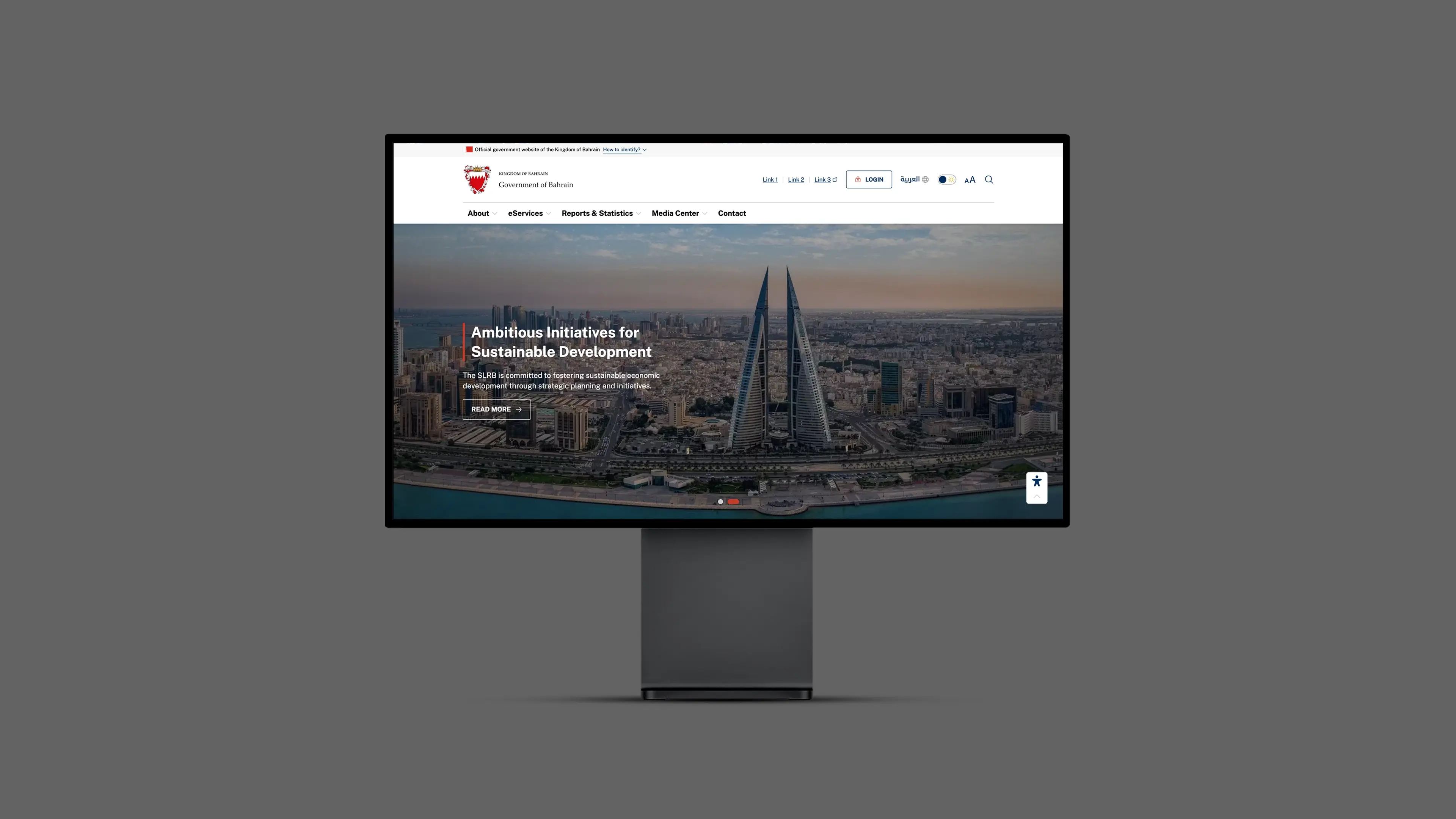
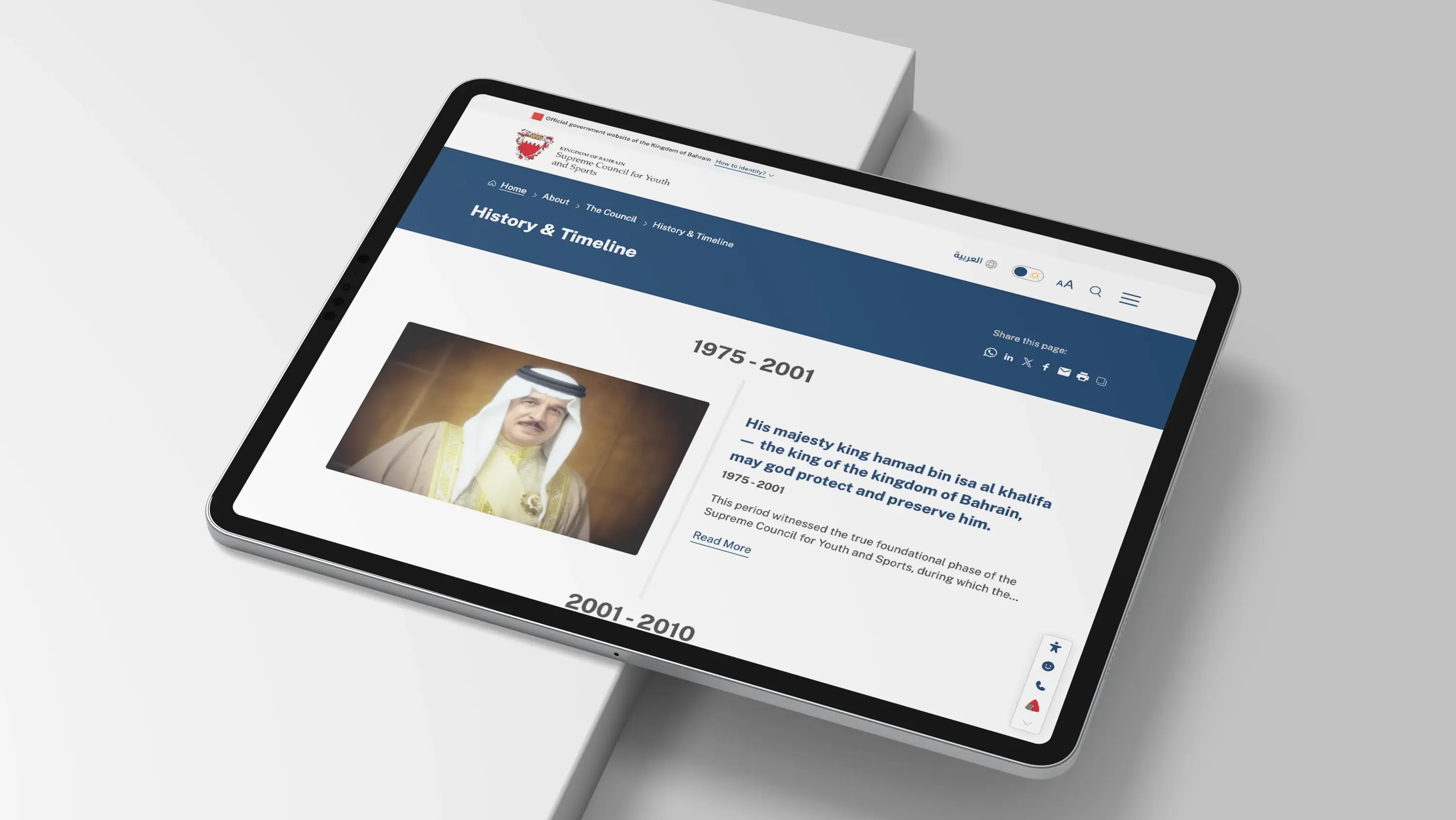
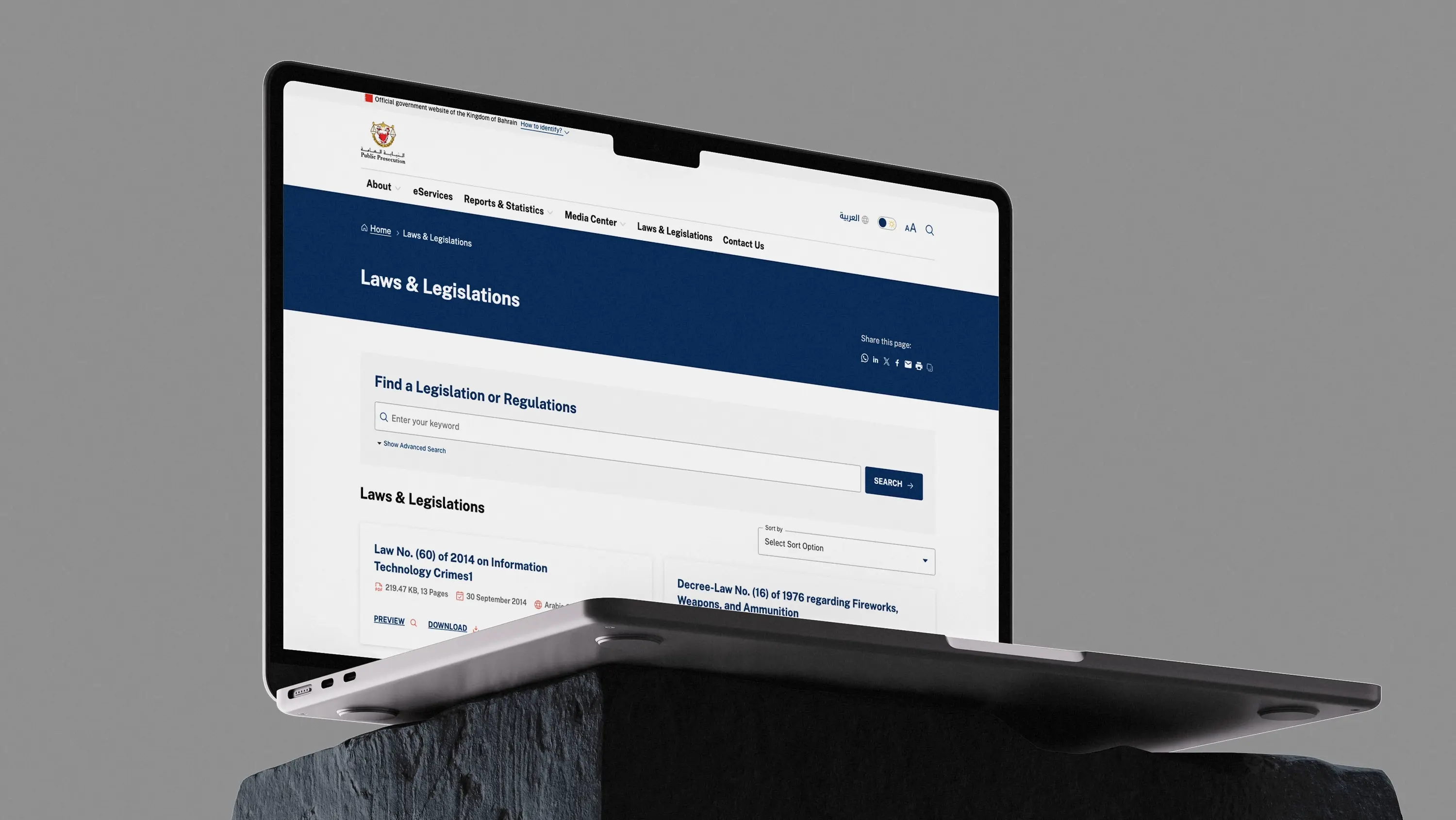
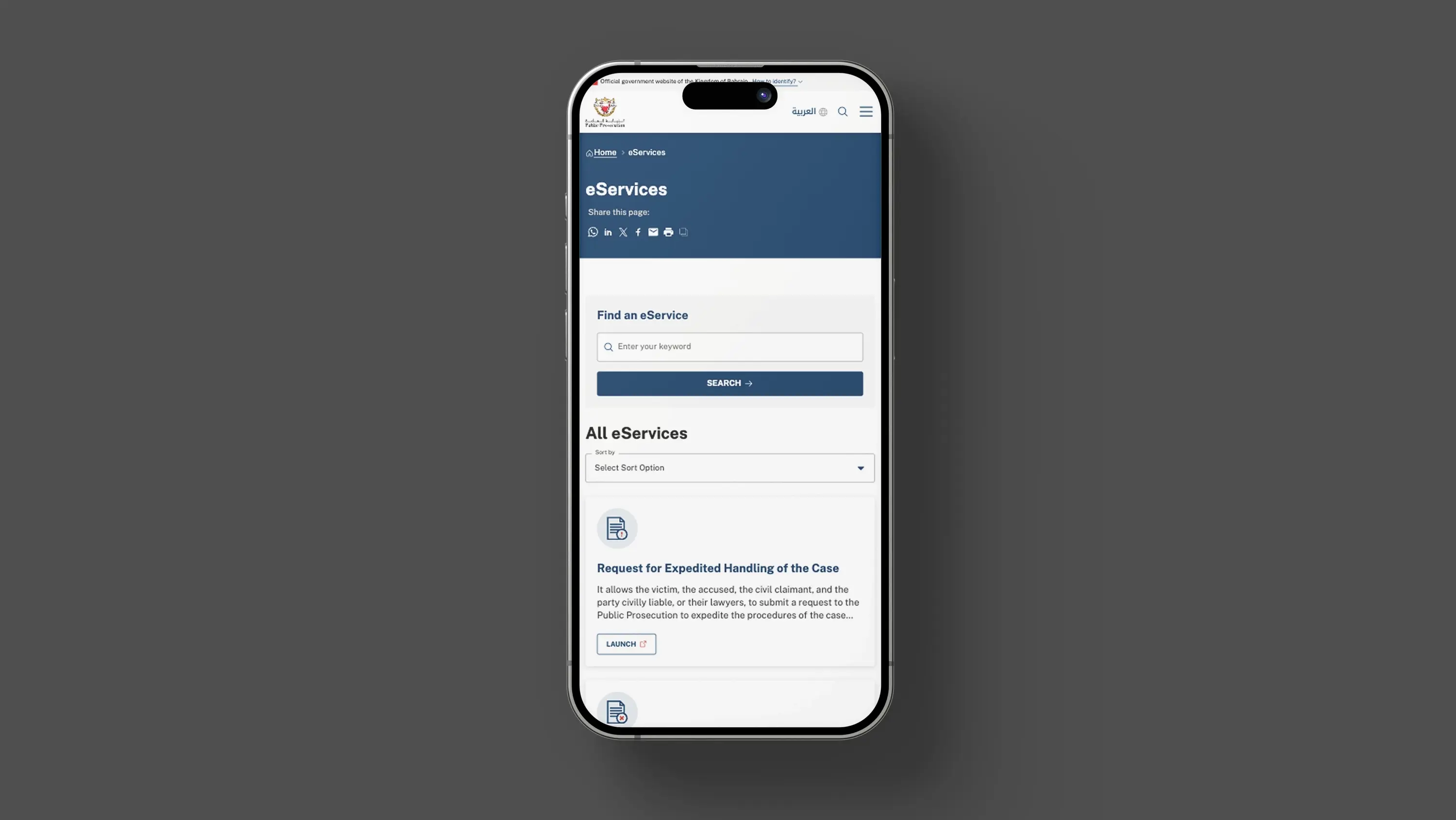
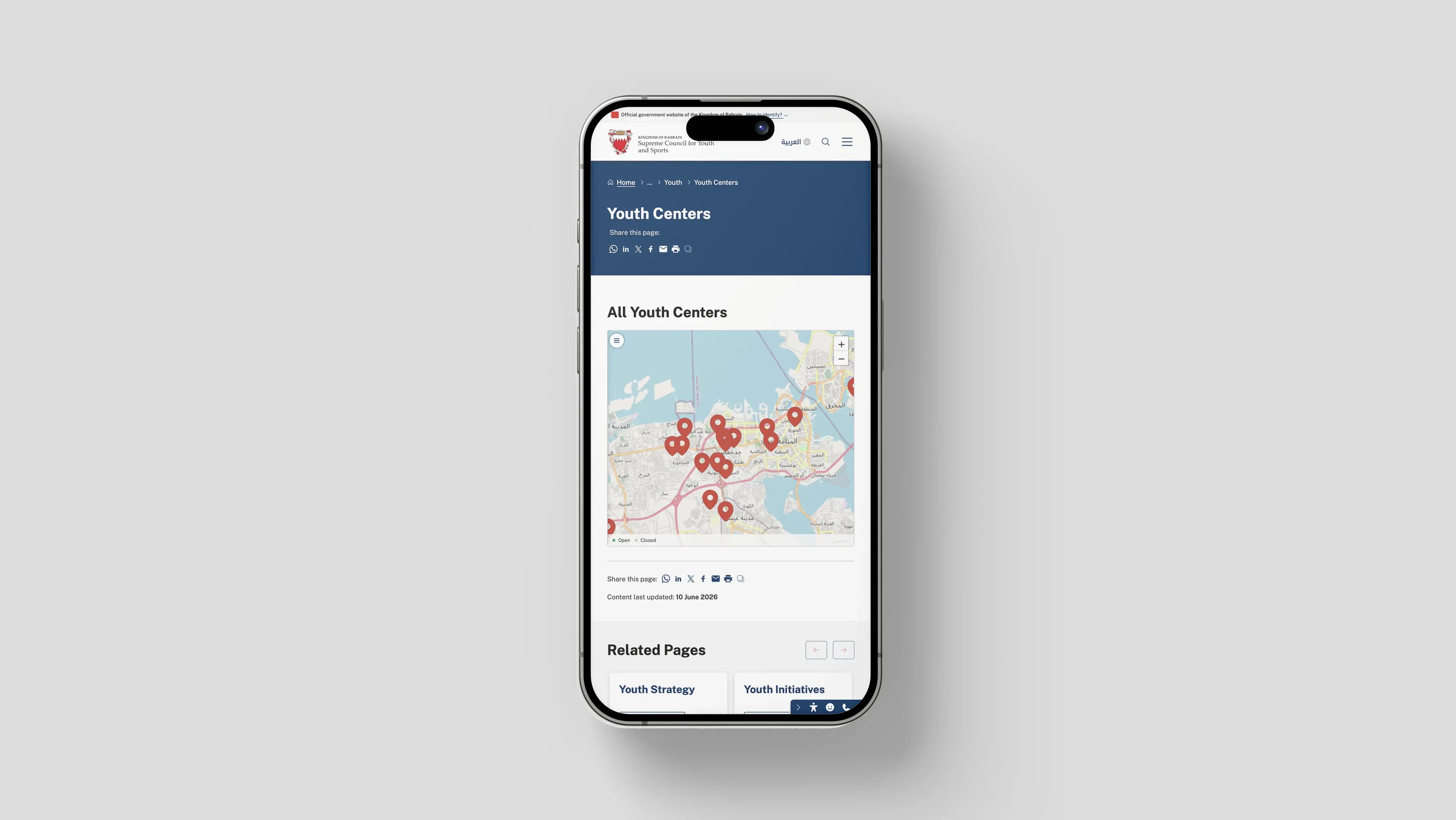
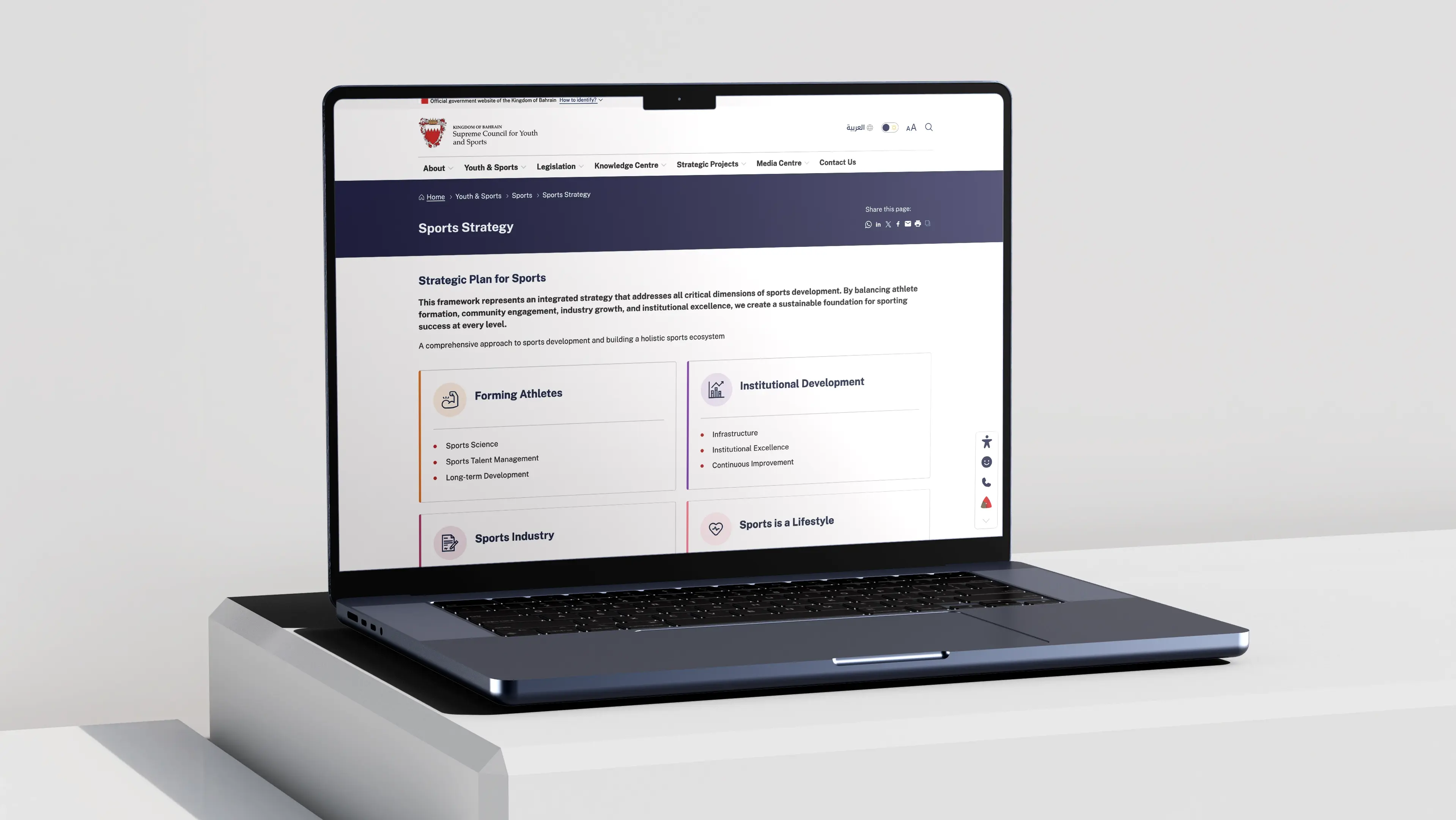
As part of a national commitment to digital excellence, the Kingdom of Bahrain wanted to build upon existing frameworks and enhance its National Enterprise Architecture to achieve a more unified, "Whole-of-Government" approach. This alignment would be the essential foundation for a consistent digital identity and a national design system.
Design Systems / User Experience (UX) Strategy / User Interface (UI) Design / Website Design & Development
The Challenge
With digital services expanding across ministries and government authorities, each entity had developed its own digital presence independently. The opportunity was to unify this landscape through a structured, nationally adopted framework.
The Solutions
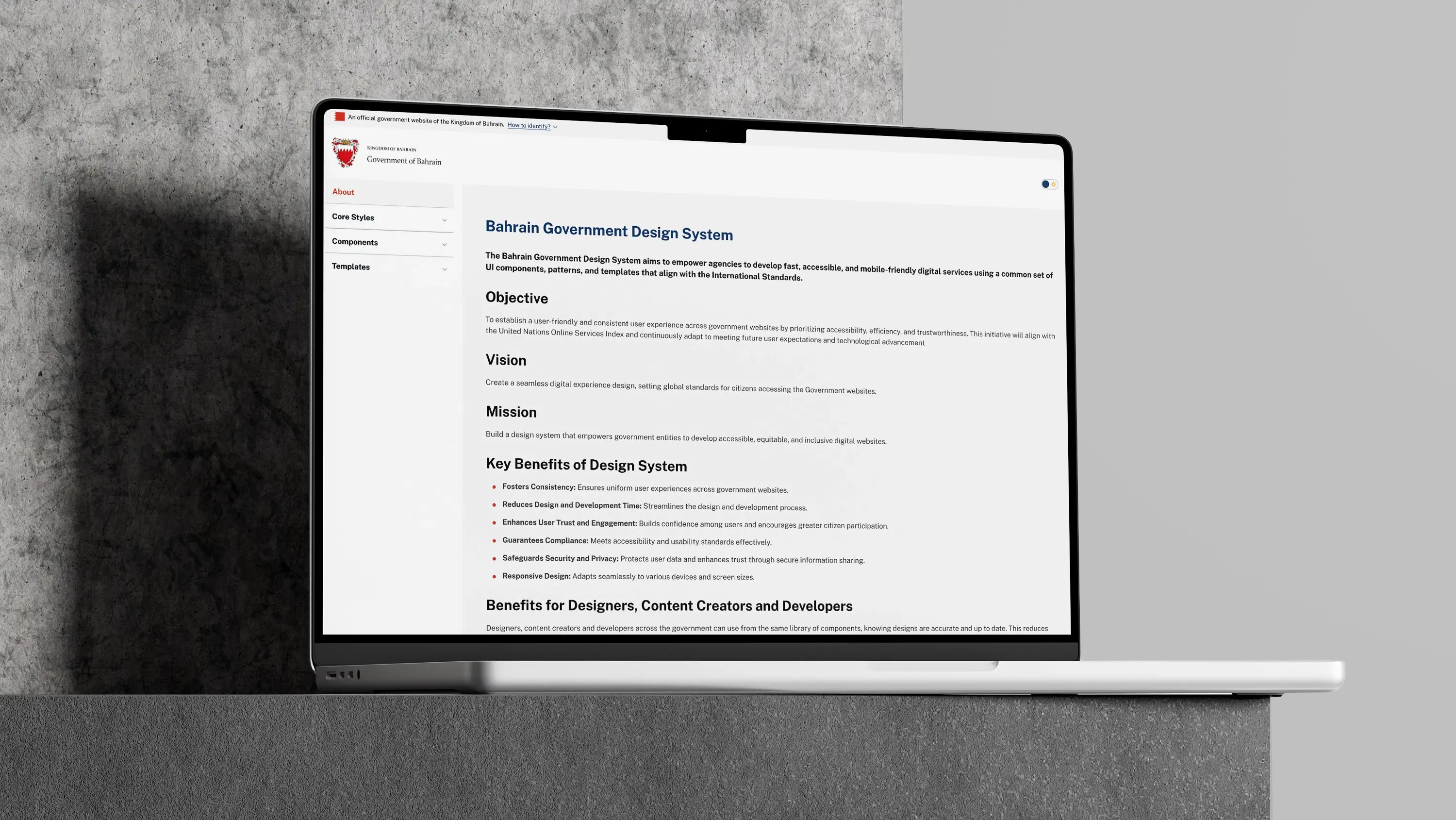
Boxon developed the Bahrain Government Website Design System, a scalable framework that standardised design and digital delivery across all government entities in the kingdom.
Digital
Design Systems
Bahrain's government digital services had grown across ministries and authorities, each entity adapting its digital offering according to its needs, leading to a fragmented experience for the end user. The design system Boxon built gave that landscape a common foundation, logic-driven user journeys with standardised components, page templates, and interaction patterns, each paired with production-ready front-end code so that design and build stayed in sync from the start.
Starting with regional and international research and benchmarking, Boxon developed a shared framework that fostered consistency across every government website, reducing design and development time, and ensuring compliance with accessibility and security standards across devices.
We developed a strategic UX/UI framework, establishing the interaction principles, visual language, and structural logic that would apply across the system. The aim was not uniformity for its own sake, but coherence: a digital environment where a citizen moving between services would encounter the same quality of experience at every step.
Component & Template Curation
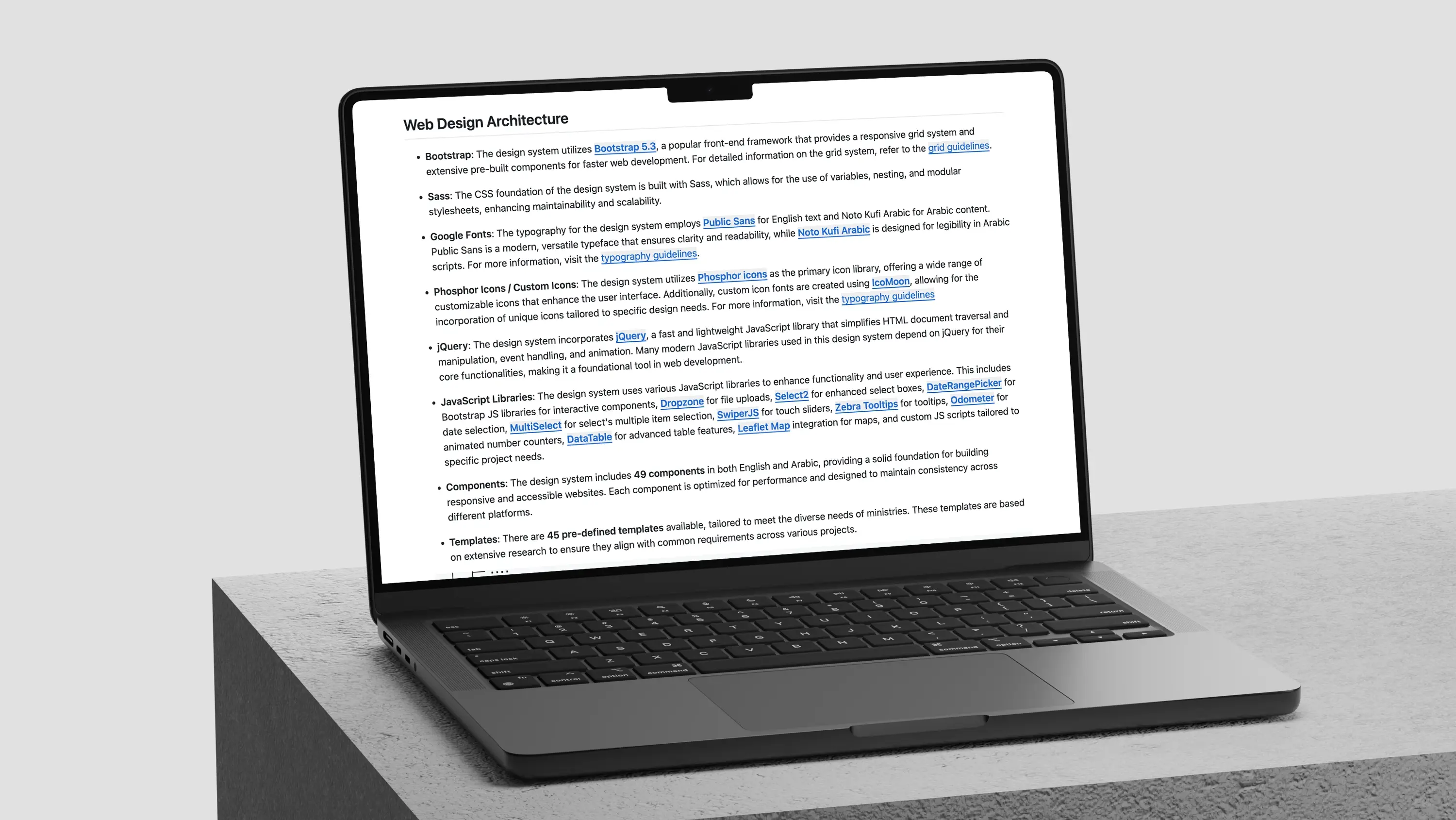
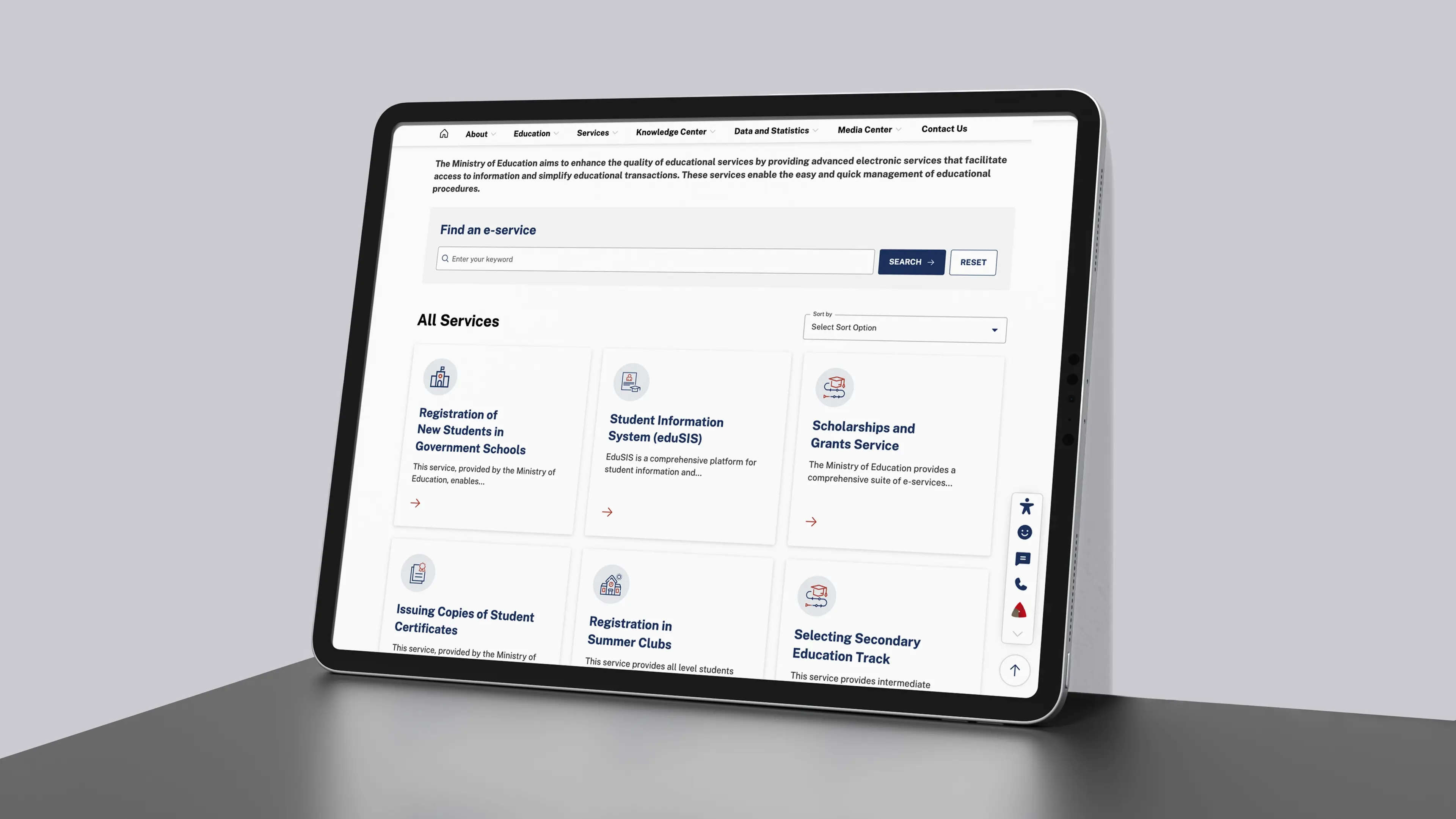
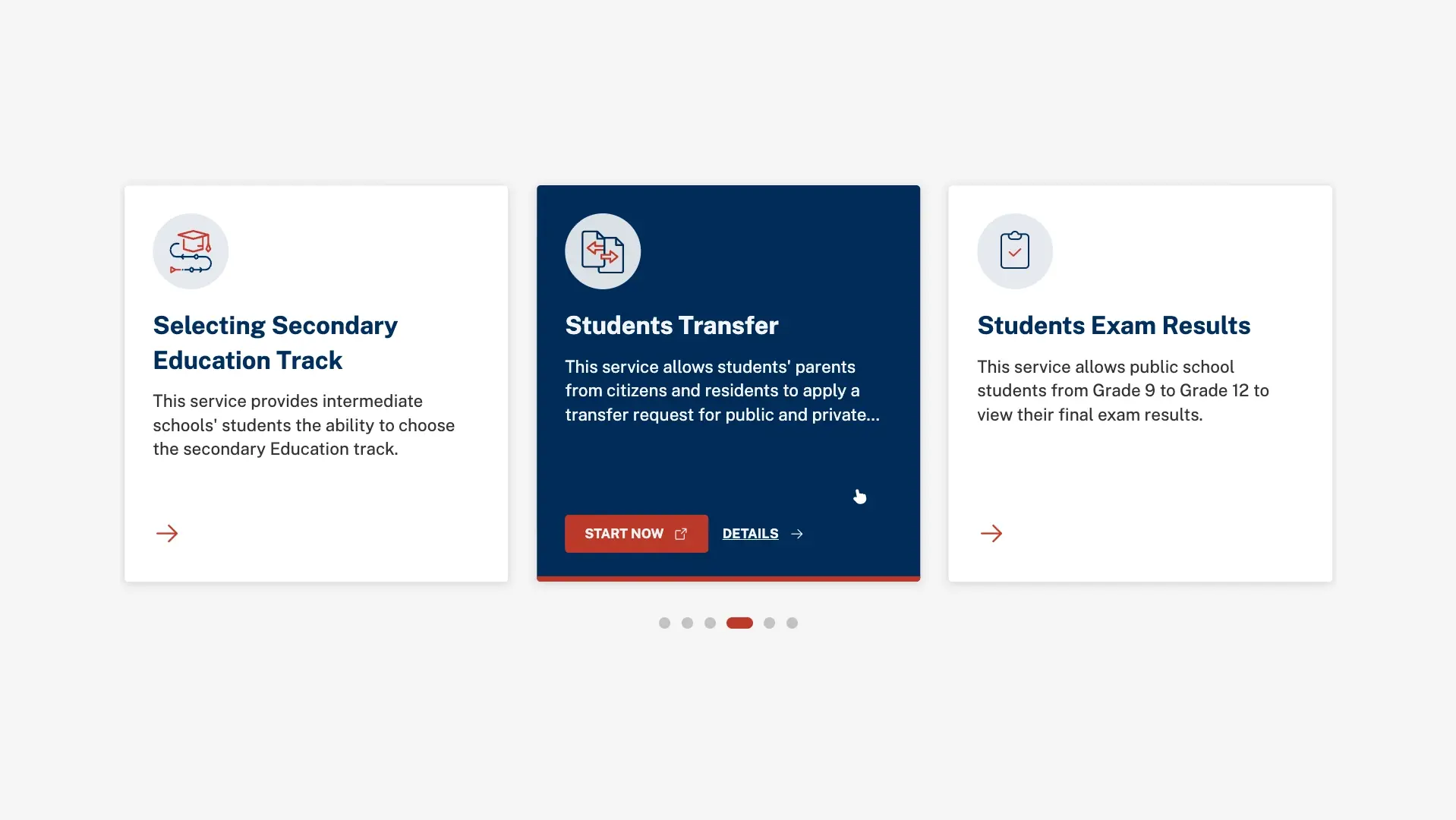
We developed the system as a modular toolkit, featuring 49 standardized UI components and 45 pre-defined templates. Rather than building from zero for every new project, we provided entities with ‘atomic’ parts, which are the basic building blocks of an interface, that were pre-tested for logic and user flow. This approach reduces the ‘learning curve’ for citizens by removing the need to re-engineer common elements.
Design Foundations (Typography & Colour System)
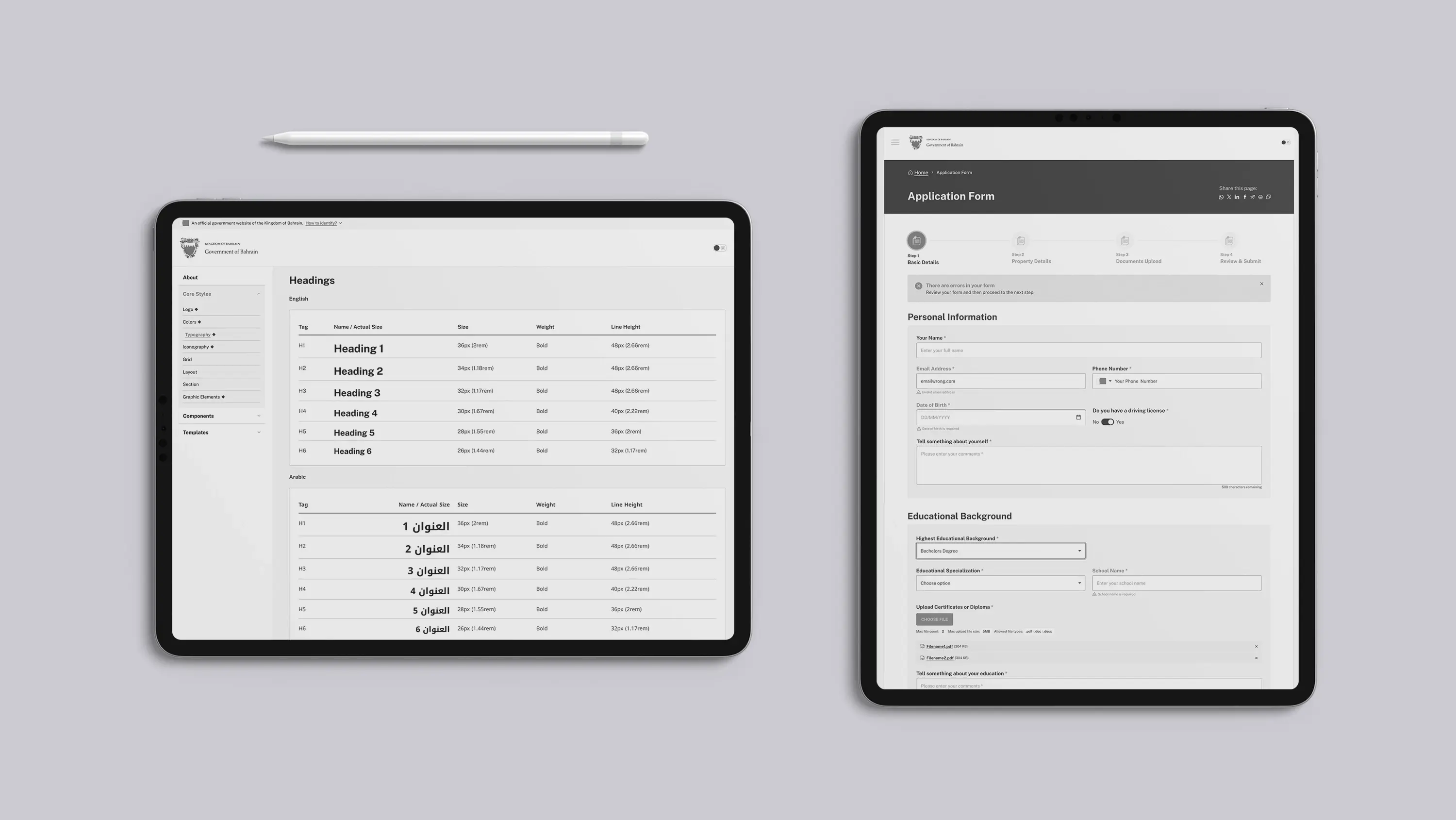
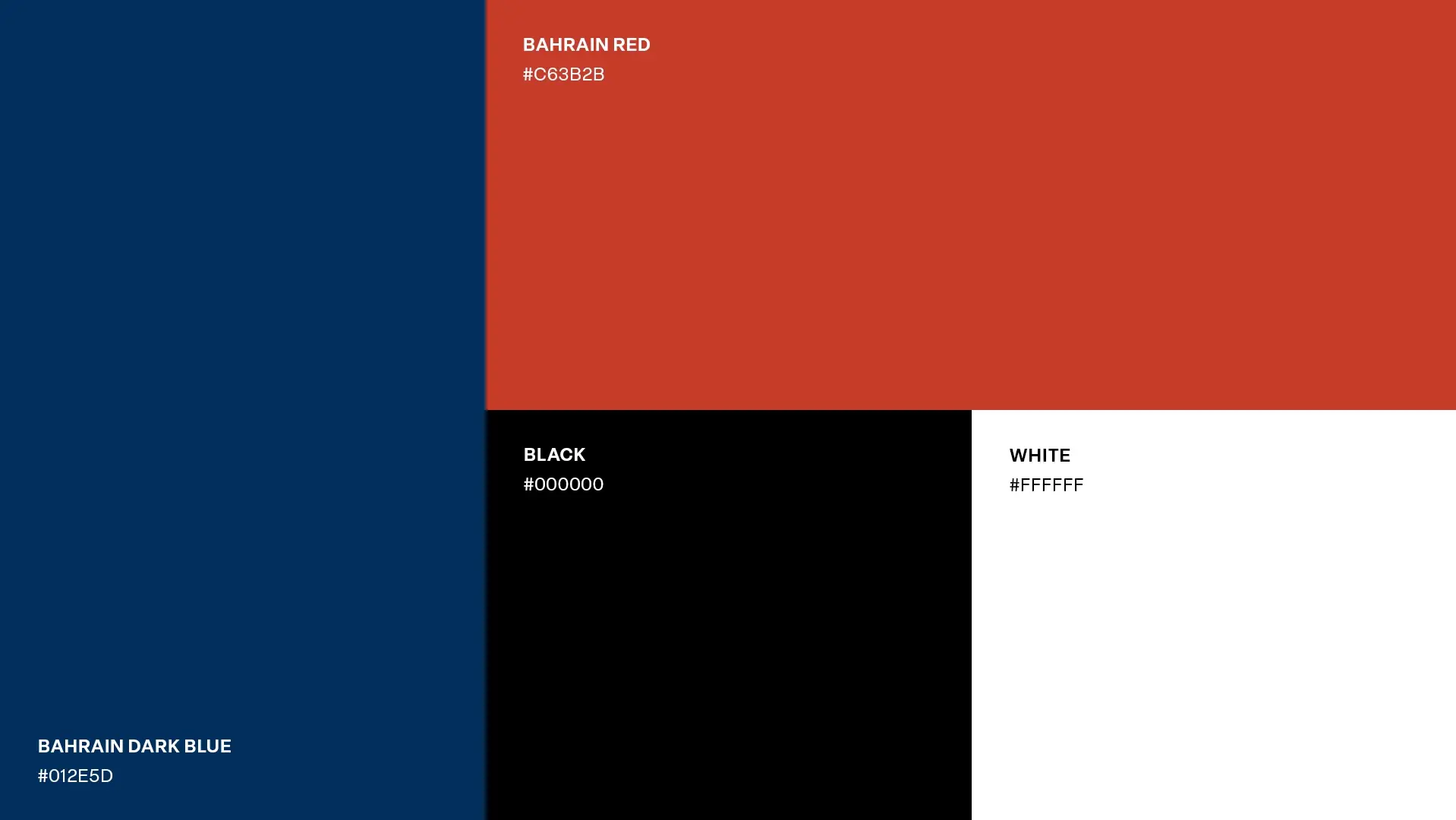
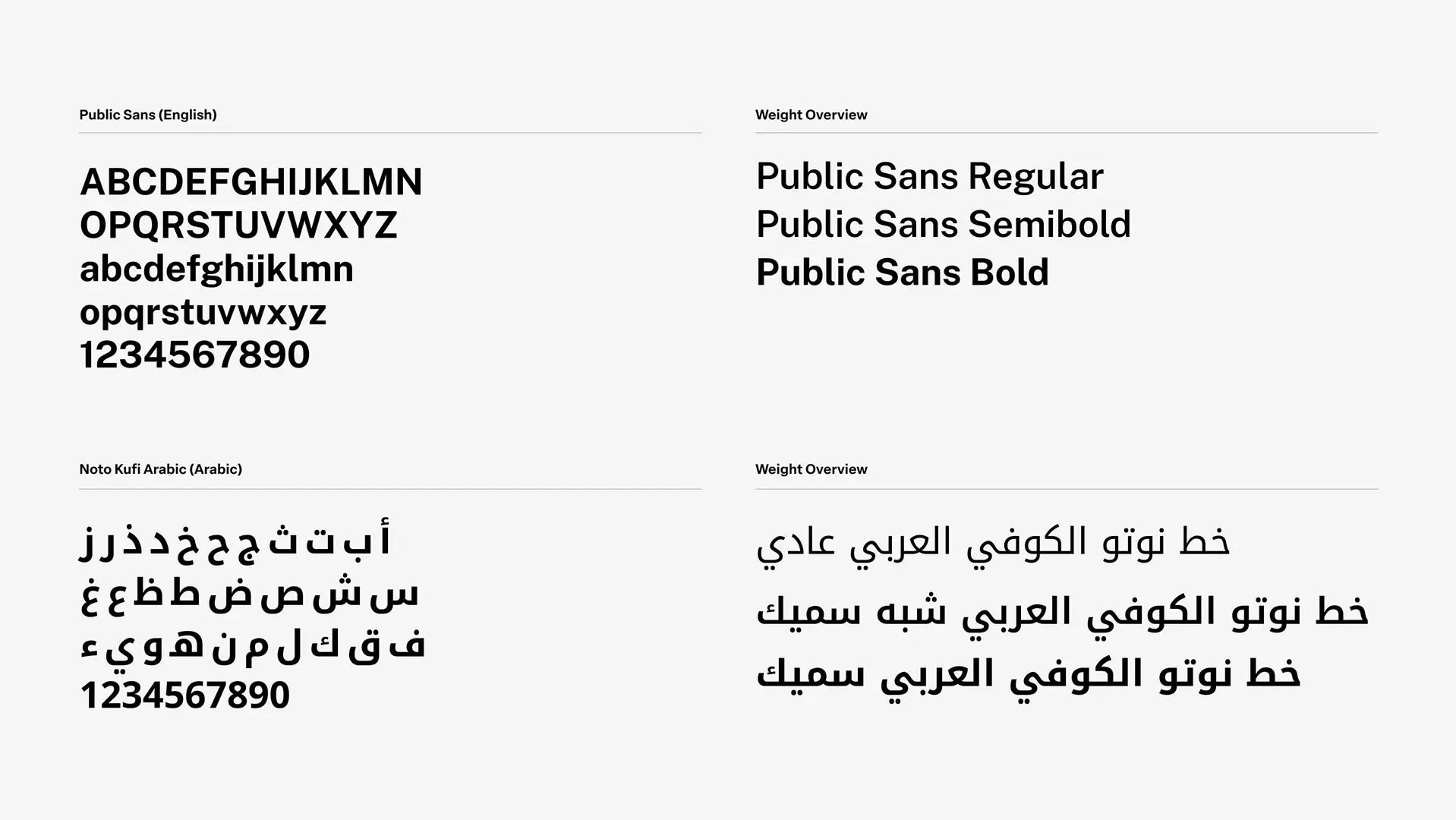
We prioritised high-legibility typefaces and a high-contrast colour system, ensuring that every choice, from the weight of the typography to specific colour ratios, allows users to instantly recognise they are on an official platform.
Public Sans for English and Noto Kufi Arabic for Arabic scripts were selected due to their high ‘x-height’ (the literal height of lowercase letters), which significantly improves reading speed on low-resolution mobile screens.
The colour palette has high contrast, ensuring that alerts and navigation remain visible to all users, including those with visual impairments, while reflecting the modern, professional standard of the kingdom's digital presence.
Accessibility & Compliance
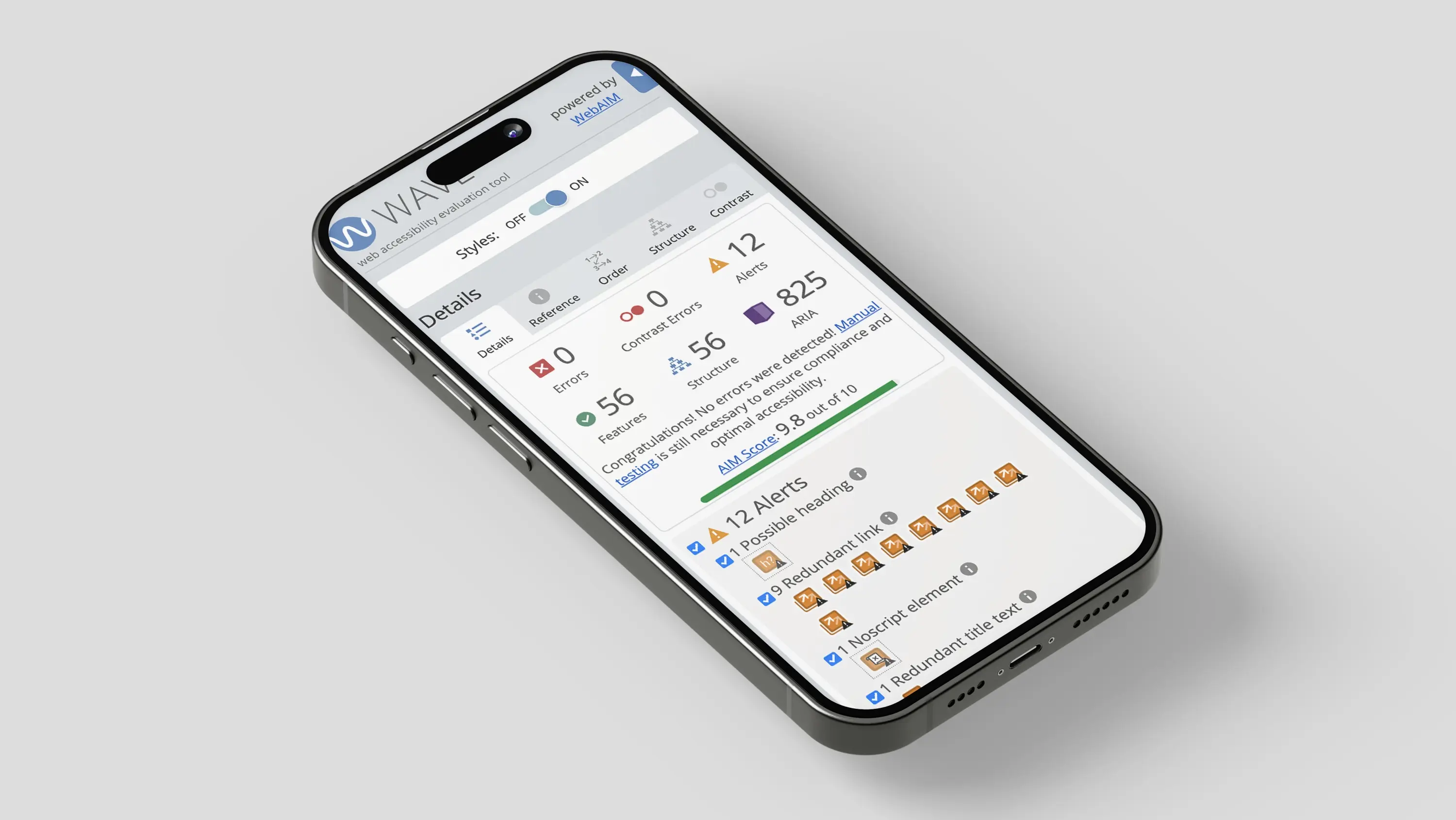
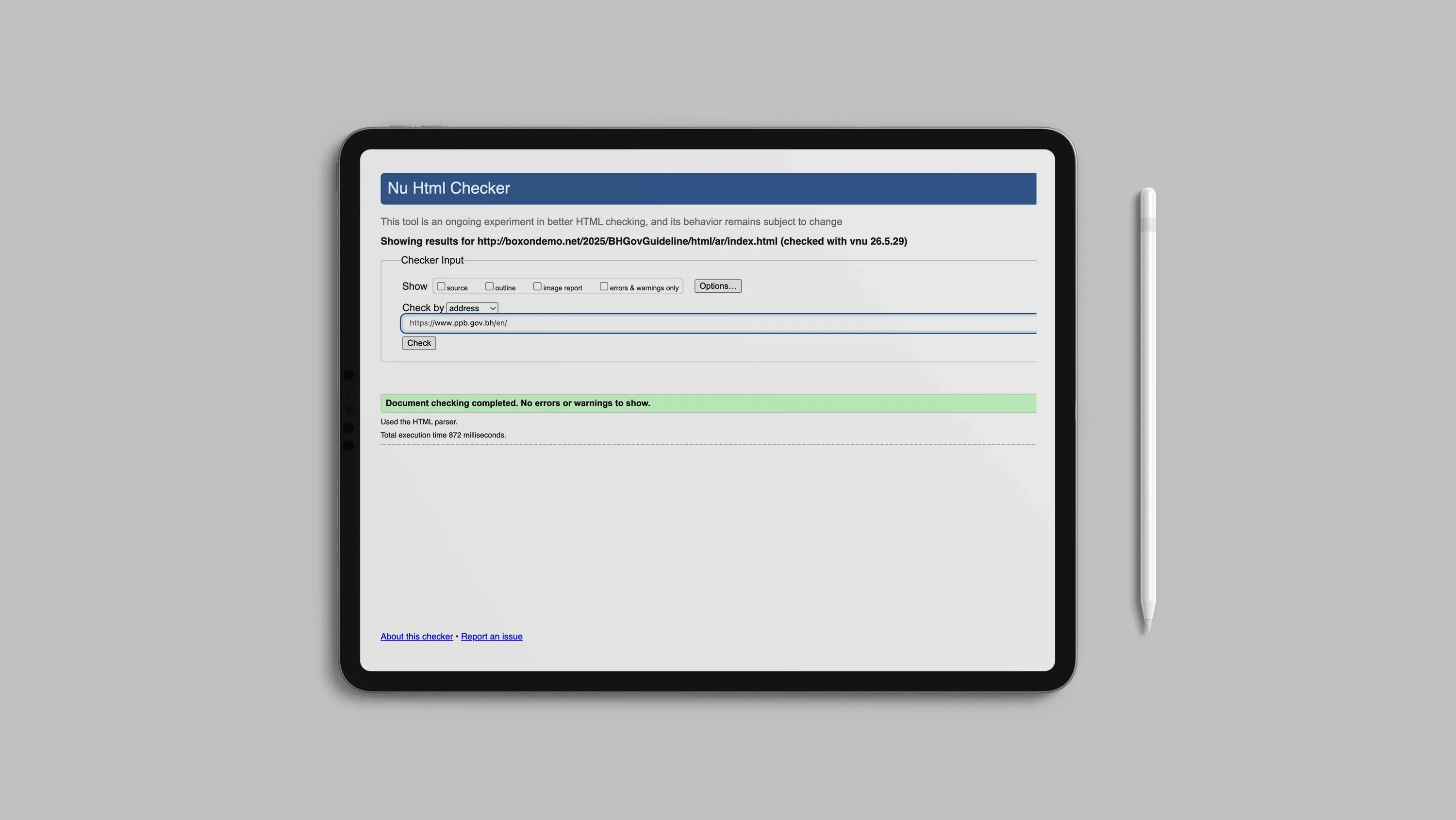
Accessibility was a baseline requirement, and the framework was built to align with WCAG 2.1 Level AA - the global benchmark for web accessibility - providing support for screen readers and keyboard-only navigation. This allows governmental entities to meet legal and ethical inclusivity requirements automatically.
Bilingual Support
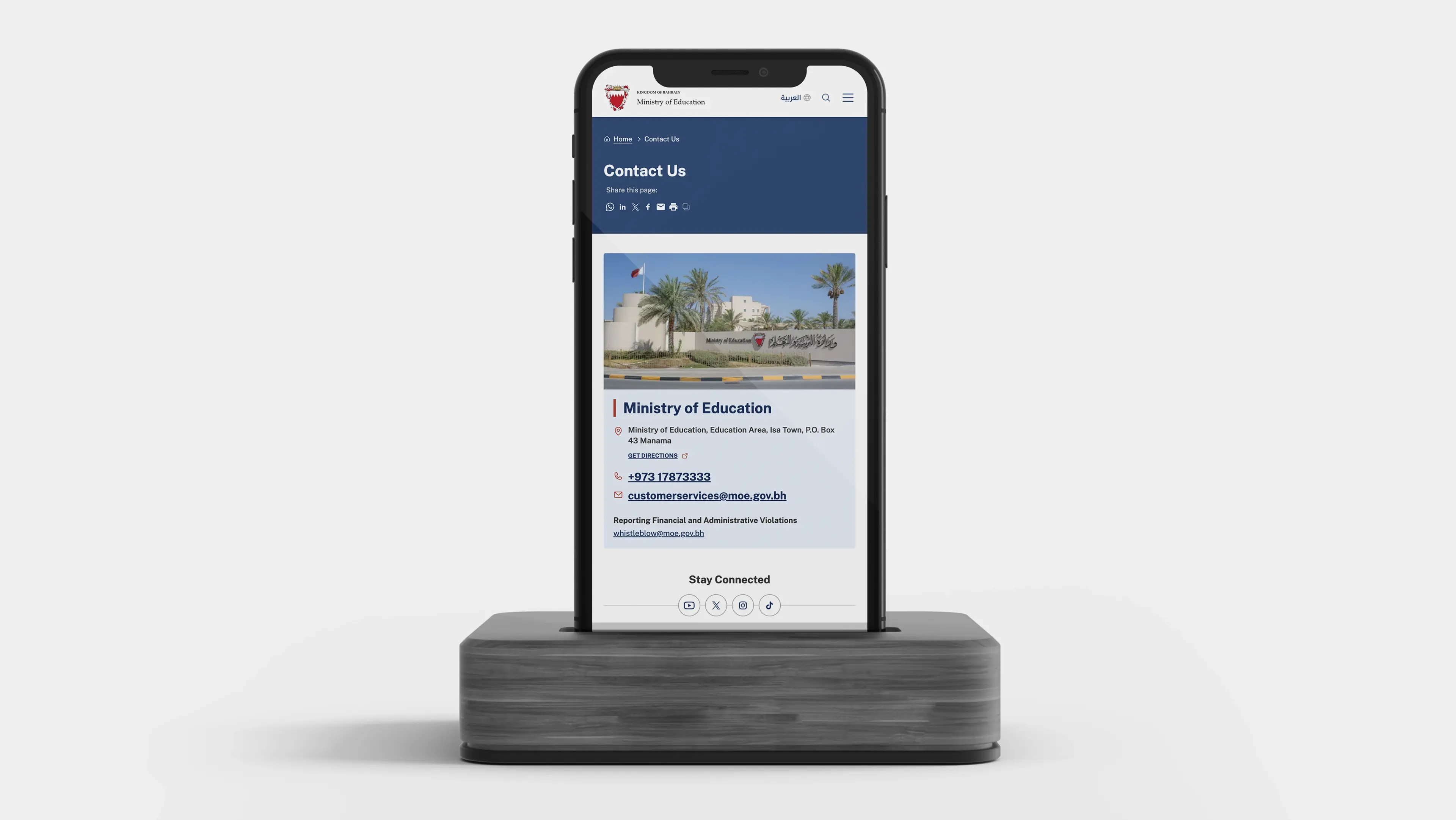
The system features native RTL (Right-to-Left) handling, meaning the entire layout mirrors correctly to accommodate Arabic reading patterns. We specifically addressed icon orientation, specialised padding, and text alignment to respect cultural nuances, ensuring a seamless experience that feels native in both languages.
Performance & Front-end Efficiency
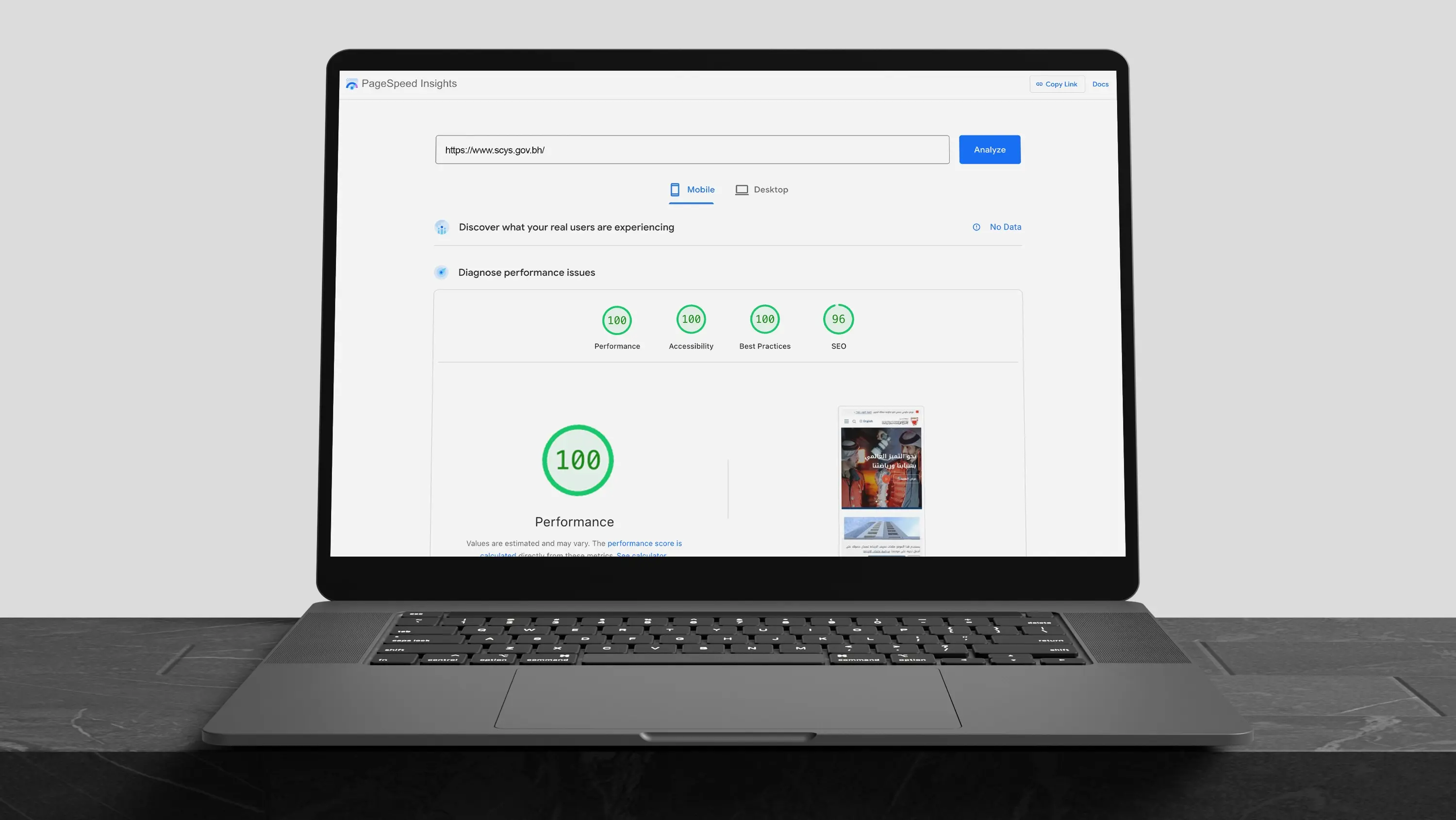
Boxon focused on creating a ‘performant’ (fast-loading) codebase to ensure stability under high traffic. By creating a lightweight structure, we minimised ‘code bloat’ (unnecessary or heavy data), which is critical for users accessing services on mobile data or in areas with limited connectivity. This focus on efficiency ensures that government platforms remain responsive across all devices.
Figma Guideline as the Source of Truth
To bridge the gap between creative intent and technical execution, we utilised Figma as the master reference point. These comprehensive guidelines provided our designers and the government’s developers with a shared visual vocabulary. This collaborative layer eliminated guesswork, ensuring that the final coded product matched our original strategic design perfectly across different agency teams.
GitHub Repository & Developer Enablement
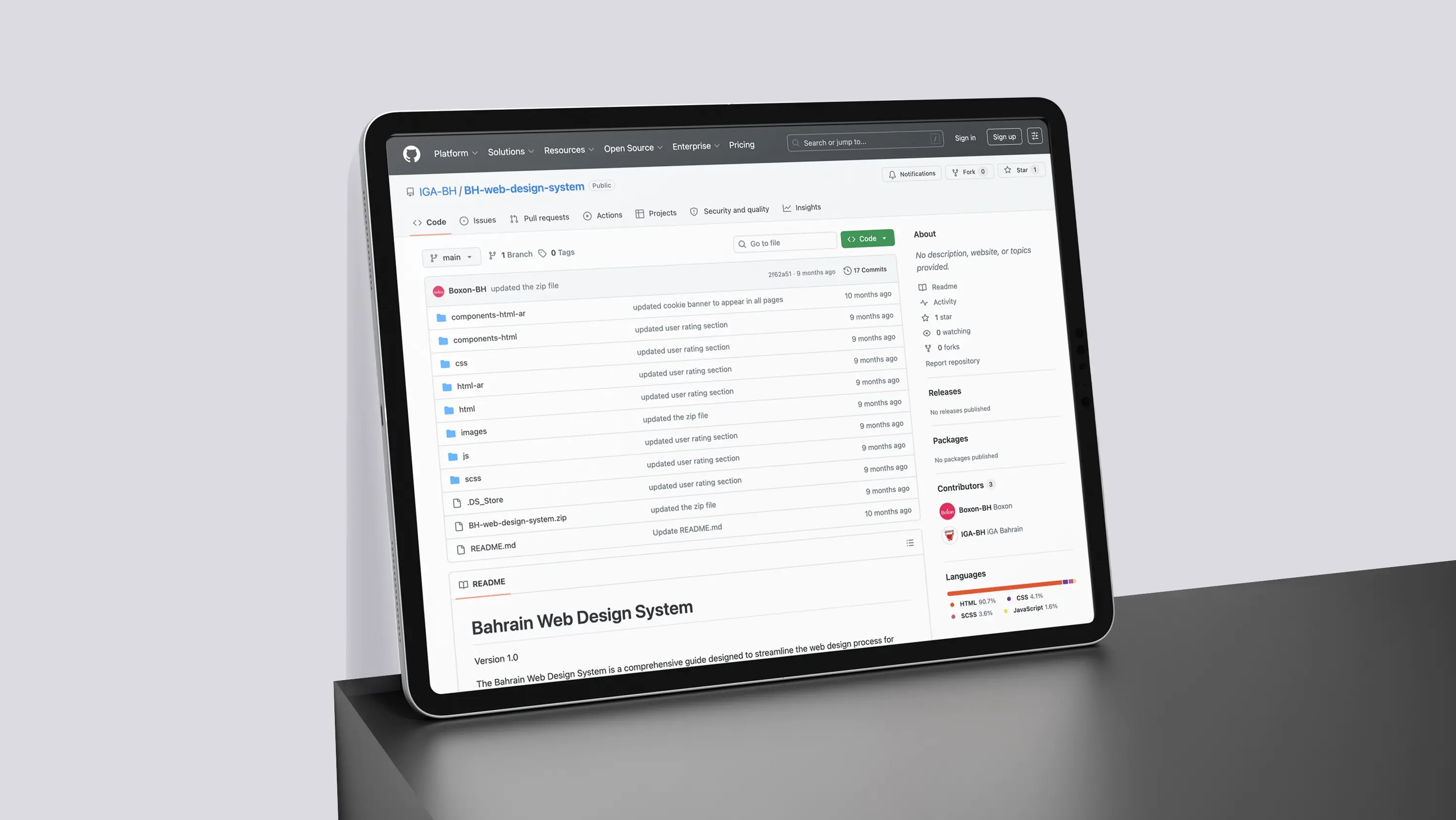
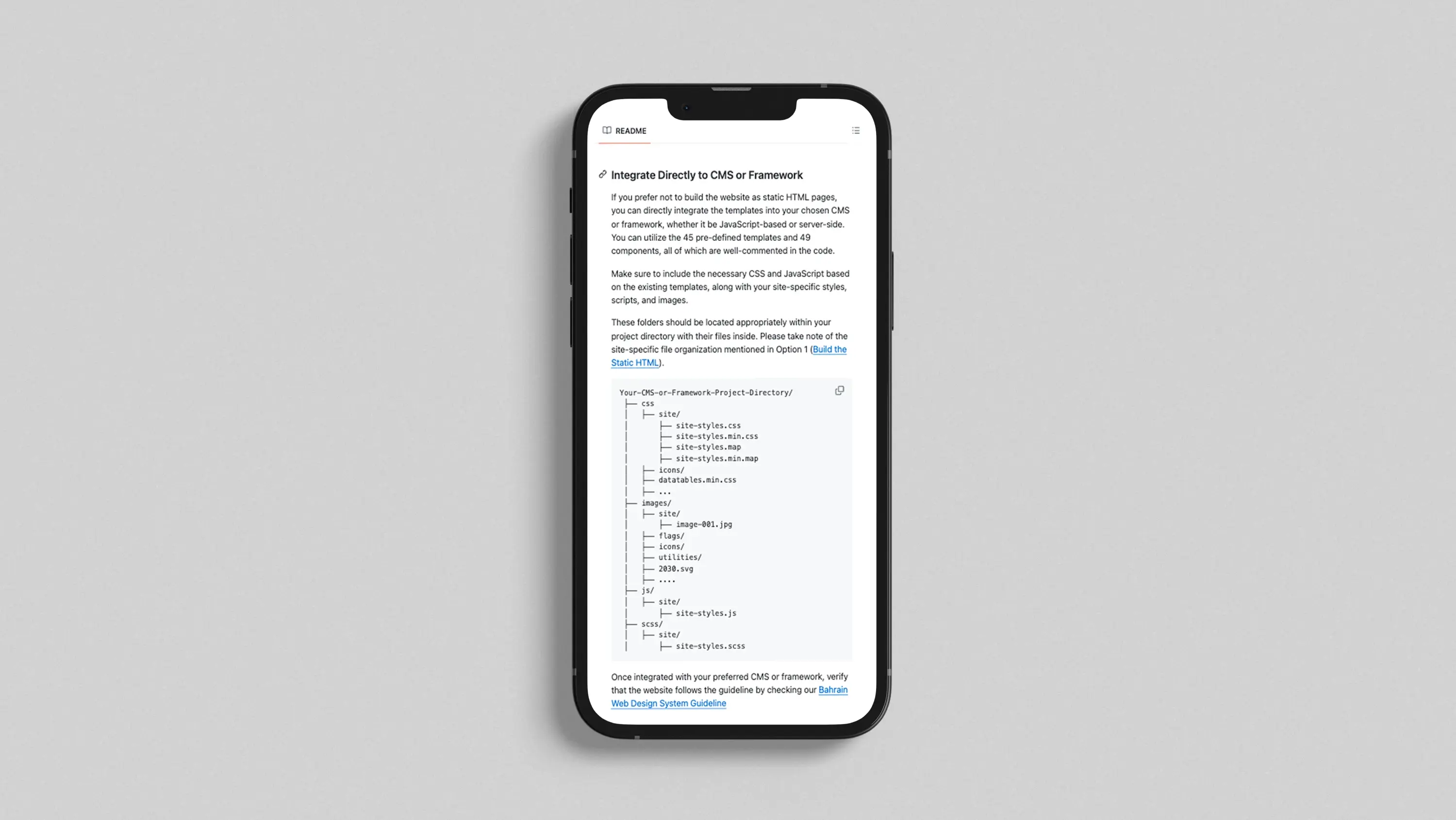
We hosted the entire codebase on GitHub for transparent collaboration. By making the framework available for developers to ‘fork’ (create a functional copy to work on) or extend, we empowered internal government teams to adopt the system quickly. This Open Source approach ensures the framework can be easily integrated into various CMS (Content Management Systems) or custom applications.
Technical Architecture & Stack
From an engineering perspective, we opted for a "framework-agnostic" (versatile and compatible with various software) foundation using HTML5, CSS (via Sass), and JavaScript. By utilising Bootstrap 5.3 for the grid and jQuery for interactive elements, we provided a robust, industry-standard stack. This ensures the system is easy to maintain, highly compatible with existing government servers, and accessible to developers with standard web skills.
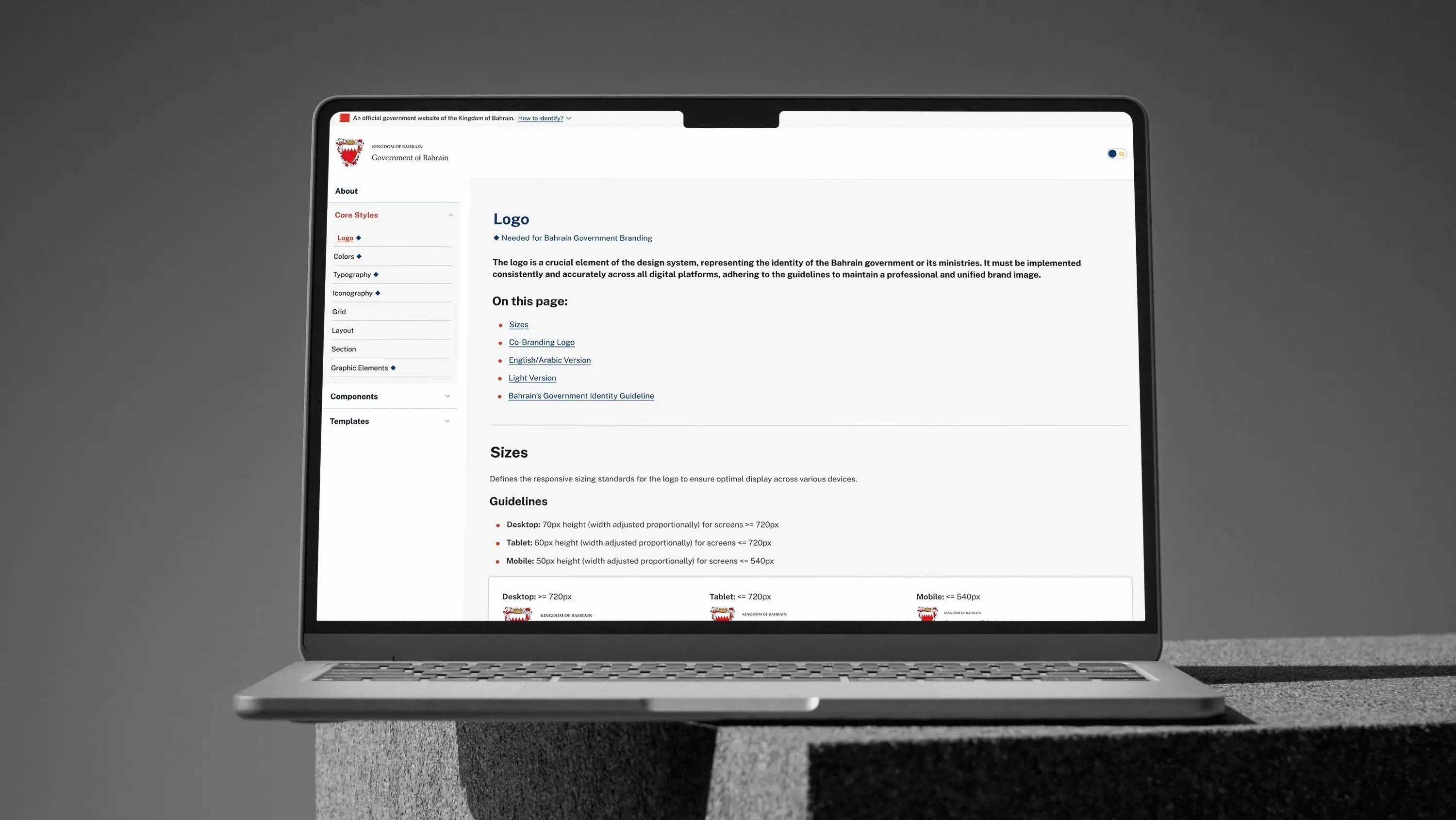
The comprehensive design system is available for all vendors of the government to view on Bahrain’s National Enterprise Architecture website.
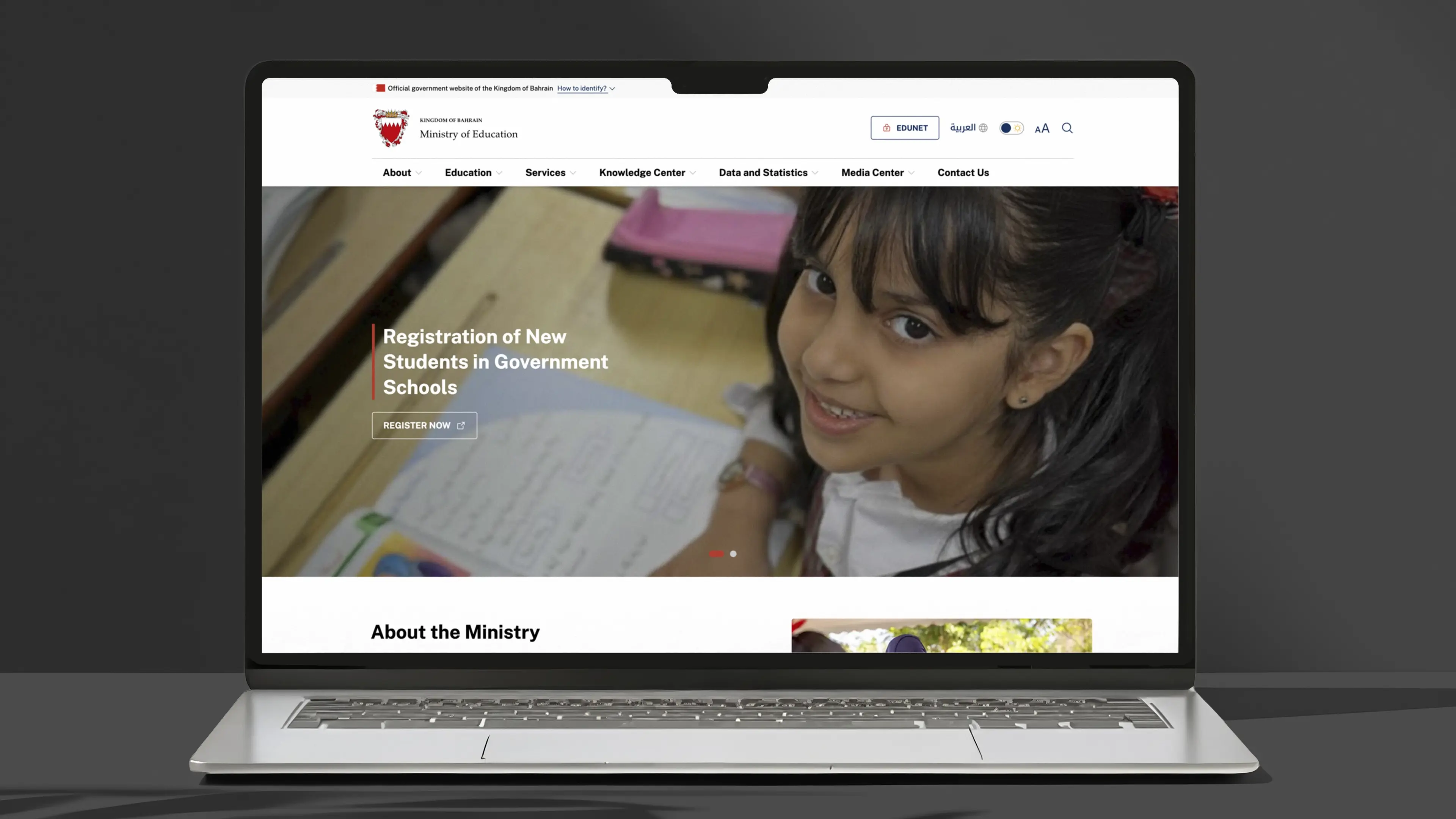
The design system was formally adopted at a national level, ratified by Bahrain's Parliament, with the Ministry of Education, a website developed by Boxon, being one of the first to implement the framework.
We began by analysing the user journeys, service needs, and pain points across ministries. The research revealed fragmented digital experiences and inconsistent terminology were major barriers for users navigating government services. To address this, Boxon defined a unified information architecture with standardised global navigation, consistent service taxonomies, and clear content hierarchies that work across all government websites. Common interaction patterns like search, filters, login, notifications, forms were standardised so users build a single mental model of how government digital services work.
User Interface (UI) Design
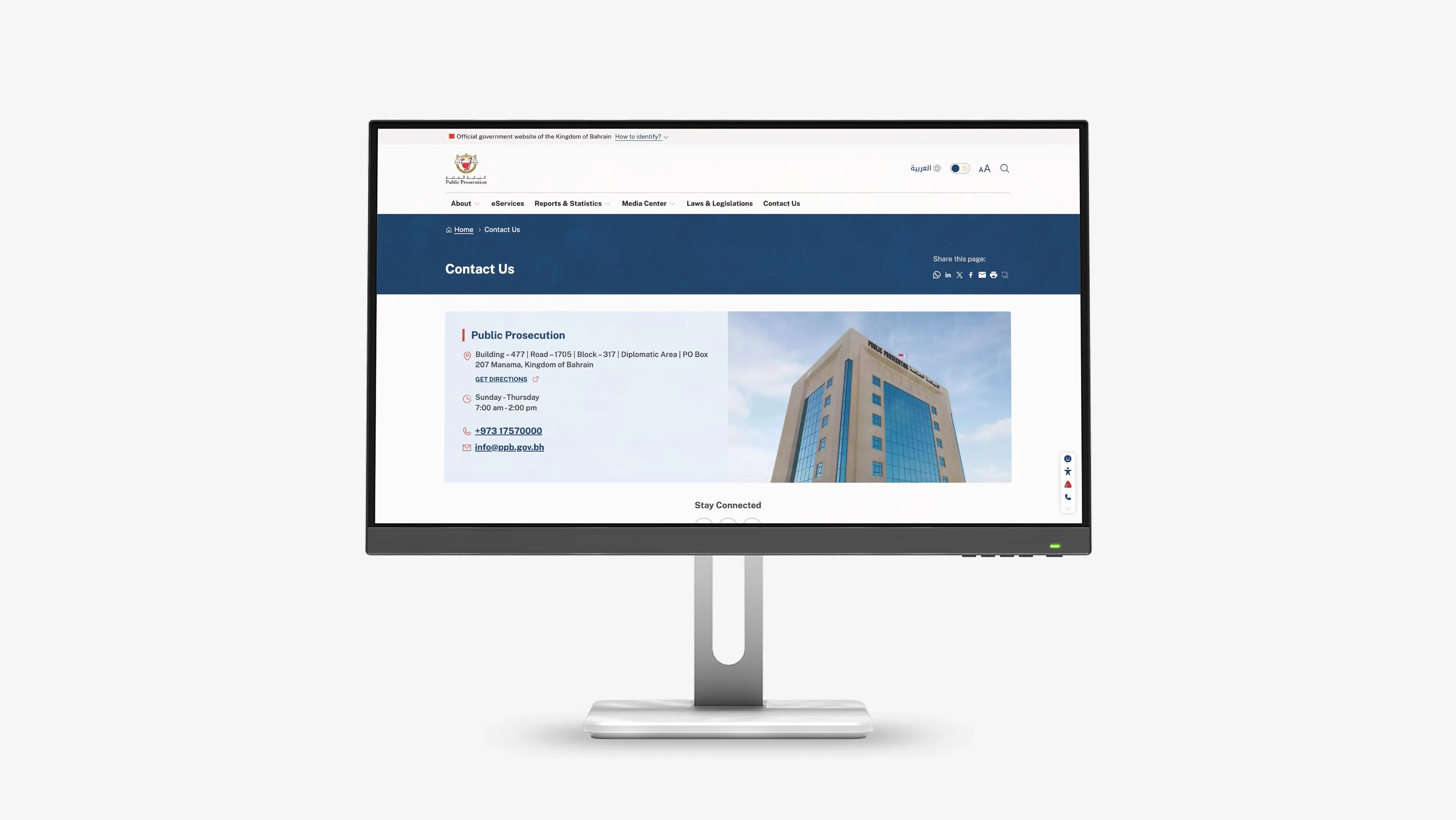
Our UI approach defined a national design language that includes a consistent colour palette, typography system, grid and spacing rules, and a comprehensive library of reusable components. Every visual element is designed to be accessible, bilingual (English/Arabic), and aligned with official government branding, ensuring that citizens perceive all government websites as part of a single, cohesive digital identity. It also serves as the single source of truth for all government designers and developers, enabling consistent implementation across government entities and ensures that the design system is efficiently scalable.
Website Design & Development
Using a component-driven development approach, every UI component has corresponding coded implementations, design tokens, styles, and behavior documentation. This design-to-code alignment guarantees that the live websites faithfully reflect the intended design system while remaining maintainable and scalable for government teams.
The architecture is technology-agnostic and modular, allowing government entities with different CMS platforms and technical stacks to adopt the national design system without losing visual or functional consistency. Development practices embed performance optimization, secure coding patterns aligned with government security standards, and compliance with Bahrain’s National Enterprise Architecture and digital policies.